


01. Where the money was leaking
Mobile carried the traffic. Desktop carried the sales.

02. The problem I chose to solve
High-intent pages had no direct path to purchase.
Users were evaluating artwork from mobile collection/product pages.
The purchasing path required users to navigate away from the decision point.
The experience required repeated page transitions before checkout.
03. What the old screens made people do
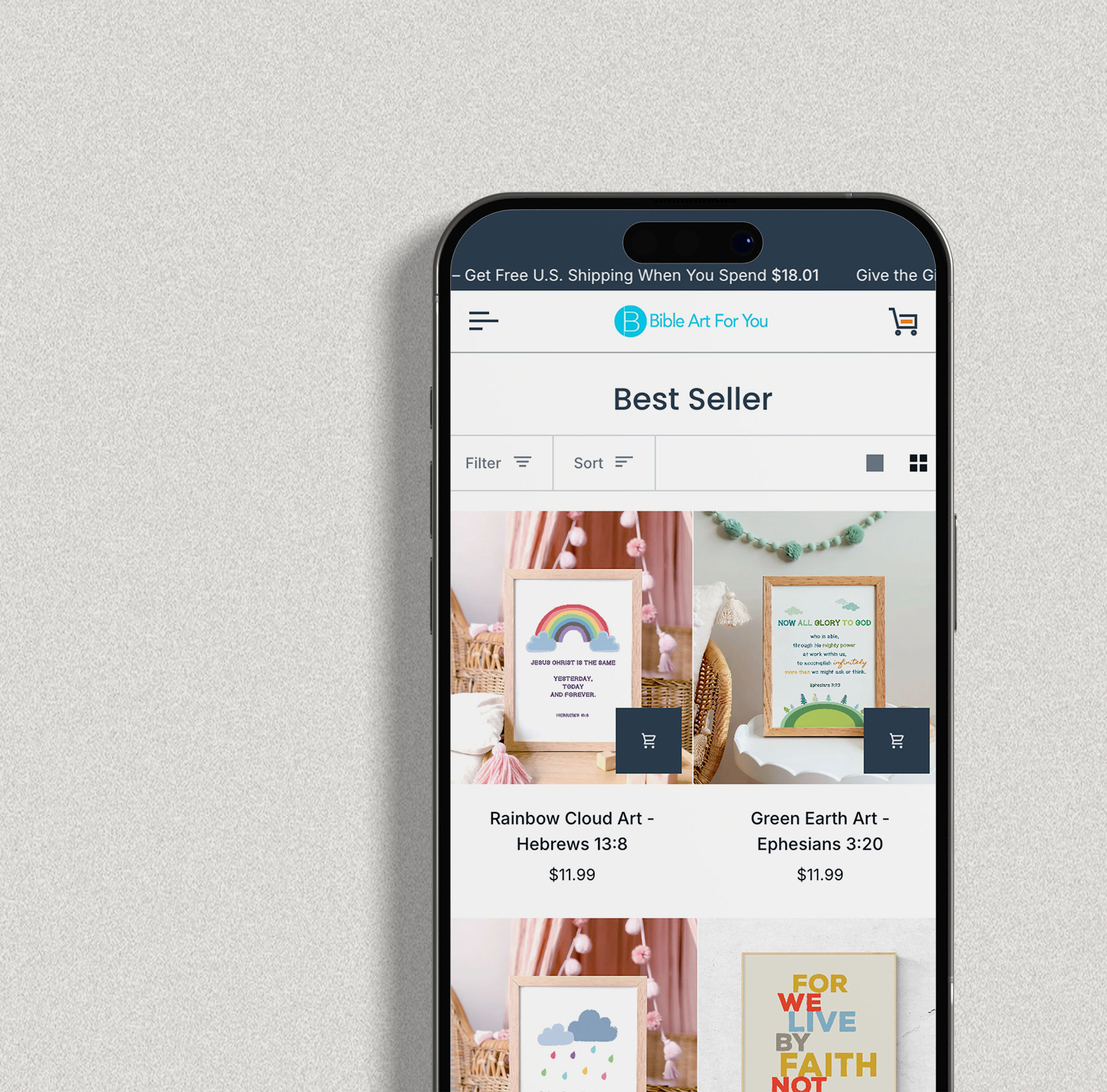
Best Seller grid

Collection
• Cards were purely navigational — no way to add, no way to compare
• Price sat below the fold of each card; savings weren't visible while scanning
• The floating promo widget covered the third product's title
Where every purchase was forced

Product
• Title and price appeared below a full-height gallery plus a thumbnail rail
• The promo widget sat directly on top of the product name
• Add to cart required a second scroll after the details accordions
Design principle
04. The change
Make discovery actionable
Before
Browse only
After
Browse and buy

Shoppers were already comparing products here.
A persistent add-to-cart button sits on each product image. Returning customers — who already know the print they want — never have to open a product page.
The gift widget generated almost no engagement and covered titles, prices, and the add-to-cart zone. I cut it and moved the offer into the announcement bar and cart drawer, where it's read at a decision point.
Reduced the need to open another screen before taking action.
05. The path now
Seven steps became four.
Step 01
Land
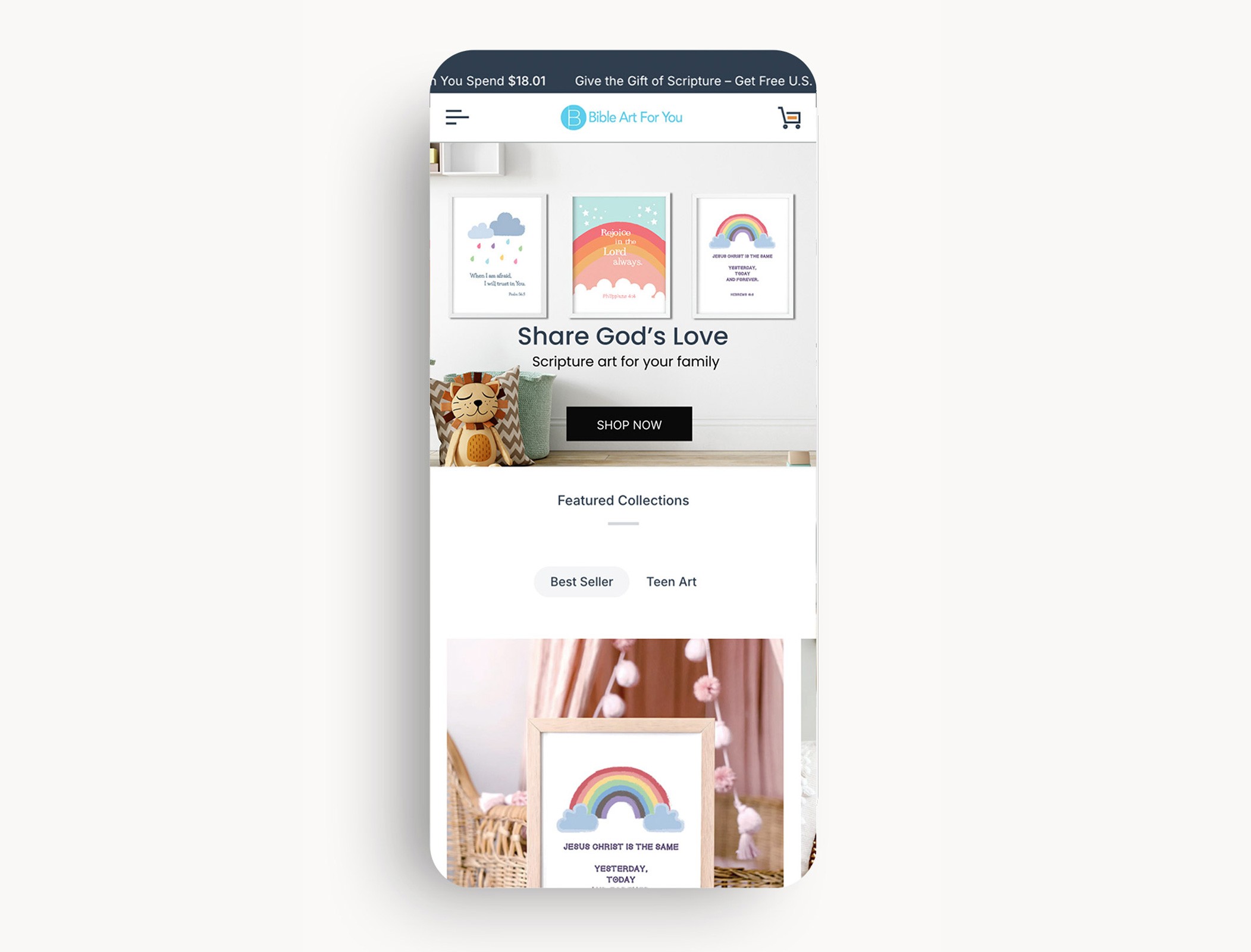
Hero reads clearly on a phone; collections start immediately below.
Step 02
Browse and add
Price, savings and add-to-cart all live in the card. No page change required.
Step 03
Review

Cart opens in place with a pinned checkout button showing the total.
Step 04
Pay

Express wallets sit above the form so returning buyers skip typing entirely.
06. Results
Fewer steps. Clearer purchase intent.
08.Where I'd take it next
What I would explore next with AI
Intent-aware product discovery
Use browsing/search signals to surface relevant artwork.
Why it could help
Reduce discovery effort for shoppers who know the room, occasion, or theme but not the exact product.
Guardrail
Explain why recommendations appear and keep manual browsing/filtering available.
Conversational gift finder
Help shoppers narrow products by recipient, room, occasion and style.
Guardrail
Make suggestions reversible rather than letting the assistant decide for the shopper.
Personalized merchandising
Adapt recommendations based on explicit preferences and behavior.
Guardrail
Avoid opaque personalization; give users control over preference signals.
Next case study