The Konix
The Konix
The Konix
Designing a game-based Korean learning experience for young learners
Designing a game-based Korean learning experience for young learners
Turning a complex learning system into short, consistent, repeatable game experiences.
Turning a complex learning system into short, consistent, repeatable game experiences.
Role: UX/UI Designer
Team: Product · Design · Engineering · Education
Timeline: 10 months
Focus: Research · UX flows · Prototyping · Usability testing · UI iteration

Why I chose Konix for this walkthrough?
Why I chose Konix for this walkthrough?
Why I chose Konix for this walkthrough?
This project pushed me to design for users I could not represent myself.
This project pushed me to design for users I could not represent myself.
This project pushed me to design for users I could not represent myself.
Young Korean learners
I was not the target user
I could not recreate the experience of learning Korean for the first time
The product had to follow a real learning curriculum
The experience also had to be engaging enough that children wanted to keep playing
Young Korean learners
I was not the target user
I could not recreate the experience of learning Korean for the first time
The product had to follow a real learning curriculum
The experience also had to be engaging enough that children wanted to keep playing
What users said wasn’t always what they did.
What users said wasn’t always what they did.
We spoke with teachers, observed classroom sessions, and tested with young learners to understand real behaviors, not just opinions.
We spoke with teachers, observed classroom sessions, and tested with young learners to understand real behaviors, not just opinions.
Users

Teachers
Classroom experience and curriculum needs
Classroom experience and curriculum needs

Students
Ages 6–12
Different skill levels
Ages 6–12
Different skill levels
Methods

Interviews
Semi-structured
Semi-structured

Usability testing
Classroom + online
Classroom + online

Observation
Real play sessions
Breakdowns
Real play sessions
Breakdowns
Key insights → Design response
Key insights → Design response
Key insights → Design response


Attention dropped during longer sessions.
Attention dropped during longer sessions.
→ Keep games short and focused.
→ Keep games short and focused.

Audio increased engagement.
Audio increased engagement.
→ Make sound part of the interaction.
→ Make sound part of the interaction.

Students responded to immediate rewards.
Students responded to immediate rewards.
→ Use visible feedback and progress.
→ Use visible feedback and progress.
Research became product rules.
Research became product rules.
Research became product rules.
Our findings shaped three key design principles that guided every game and every screen.
SHORT
Keep sessions focused and manageable.
Keep sessions focused and manageable.
CONSISTENT
Learners shouldn’t relearn controls between games.
Learners shouldn’t relearn controls between games.

IMMEDIATE
Every action should produce clear feedback.
Every action should produce clear feedback.

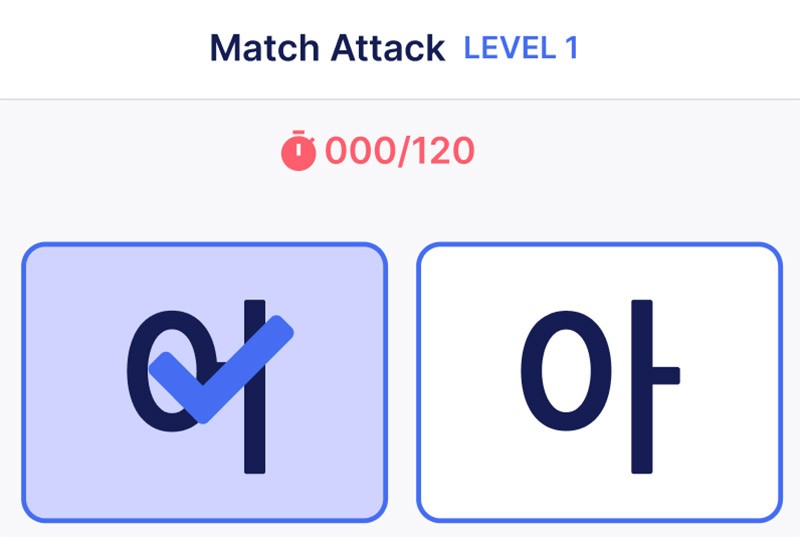
Deep Dive: Turning Hangul structure into an interaction
Deep Dive: Turning Hangul structure into an interaction
Learning goal

Design question / Early sketch / Reference


Prototype
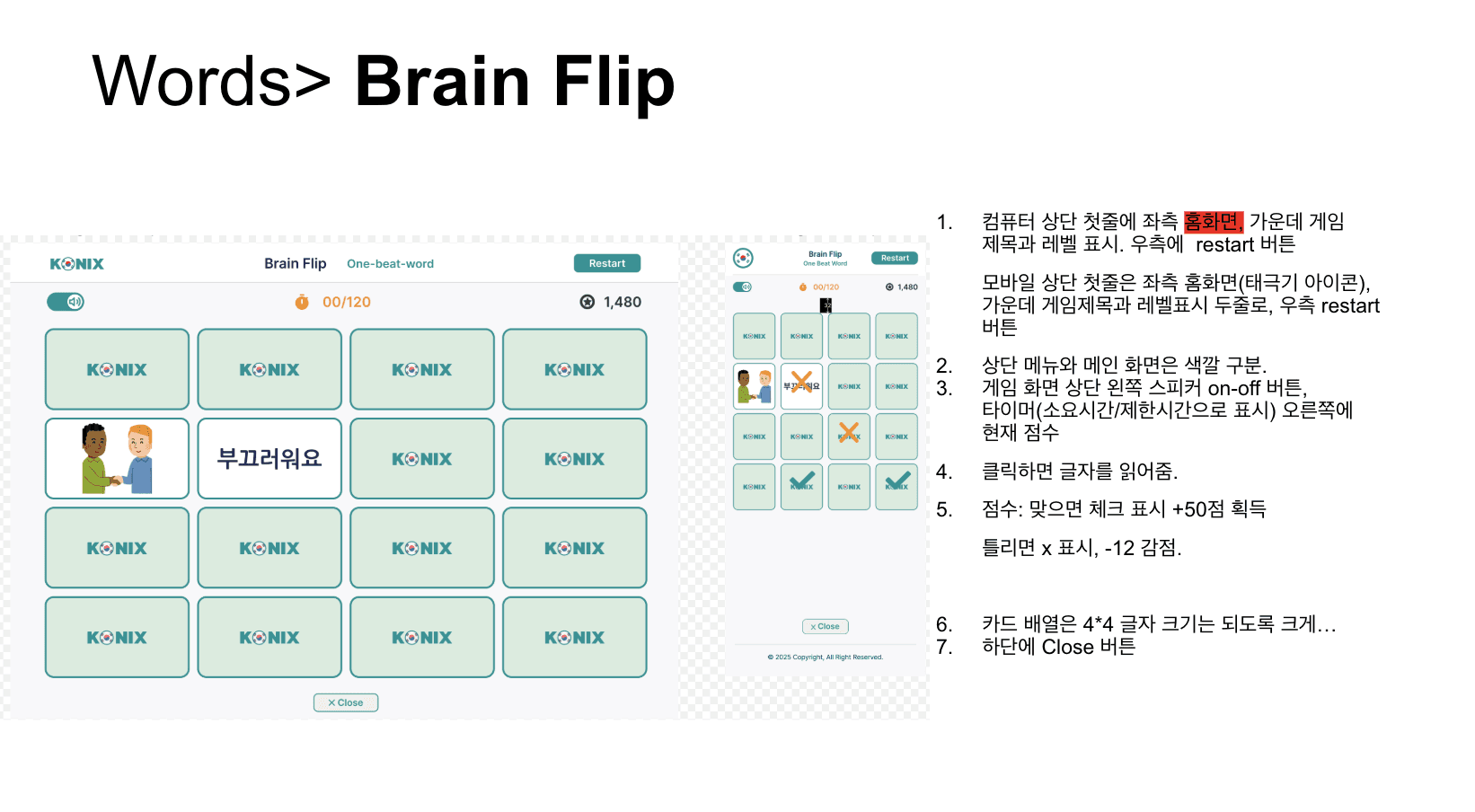
Final UI

Main Game Page
Main Game Page

Game Intro Page
Game Intro Page

Block Master Game
Block Master Game
What shipped and what I learned
What shipped and what I learned
WHAT SHIPPED
• A reusable game structure
• Consistent interaction patterns
• Responsive web/mobile experiences
• A product designed for real learning sessions
• A reusable game structure
• Consistent interaction patterns
• Responsive web/mobile experiences
• A product designed for real learning sessions
• A reusable game structure
• Consistent interaction patterns
• Responsive web/mobile experiences
• A product designed for real learning sessions
WHAT I LEARNED
• Observe behavior, not just answers.
• Design the system, not only the screen.
• Technical constraints are part of the design problem.
• Good feedback improves the work.
• Observe behavior, not just answers.
• Design the system, not only the screen.
• Technical constraints are part of the design problem.
• Good feedback improves the work.