


New Pro joins,sets a low budget
→
Too few matches to stay busy
→
Few completed jobs, no reviews
→
Ranked lower by the matcher
→
Pro churns
before profit

FingerPin never collects the revenue it acquired the Pro for

Carmen
Painter (New)
“I just wait around.”
• Checks distance first.
• Avoids vague or small jobs.
• Needs clear details and photos to feel confident.
Victor
Electrician
“The jobs don’t always make sense for me.”
• Filters by distance and job type.
• Relies on clear descriptions.
• Prefers fresh, recently posted jobs.
Aisha
Contractor
“Homeowners don’t always get back to me.”
• Only ~25–30% of leads respond.
• Looks for serious homeowners (details, timeline, photos).
• Responding late means losing jobs.
Key Takeaways
✓ Relevance first: distance, job type
✓ Clarity builds confidence
✓ Fresh jobs win attention
✓ Make it easy to act fast
For Shoppers
Easier discovery, better search, and a more relevant experience rooted in values.

For Business Owners
A clear onboarding experience, transparent plans, and tools to help businesses grow and get discovered.

from users and business owners
Marketplace transactions (Buy on One Bison) are in development and planned to launch after the first vendor cohort and buyer protection program are in place.
Building trust with verified reviews and ratings.
Natural language search to discover faster.
A tailored experience based on interests and activity.
Find value-aligned businesses in your area.
Dedicated experience for service-based businesses.
Insights and tools to help businesses succeed.
• Led UX/UI design from research to high-fidelity across web and mobile.
• Designed information architecture, user flows, and responsive interfaces.
• Built and maintained a scalable design system.
• Collaborated closely with product, engineering, data, and legal.

The marketplace isn't one screen — it's a chain, and trust has to survive every link. I designed each step to answer the question a first-time buyer is actually asking at that moment.
CART
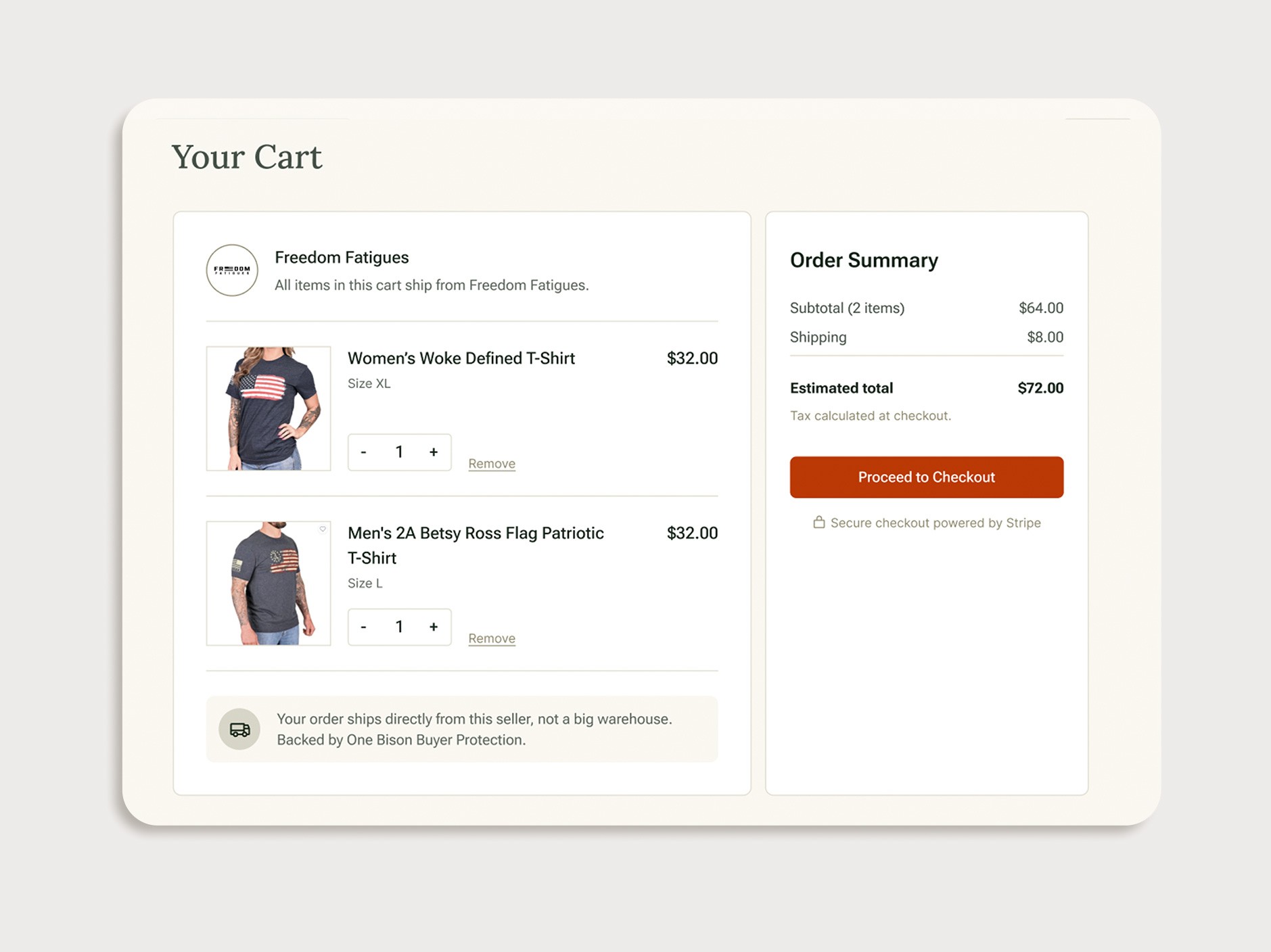
Who am I buying from?
Seller named above the line items, with a plain statement that the order ships directly from them.
CHECKOUT

Is this safe, and what's the real total?
Guest checkout with an account-found prompt, itemized costs, Stripe and buyer protection under the button.
CONFIRM

Did it work, and what now?
Order number, ship-from seller, and a route into order history so the purchase creates an account relationship.
POST-PURCHASE
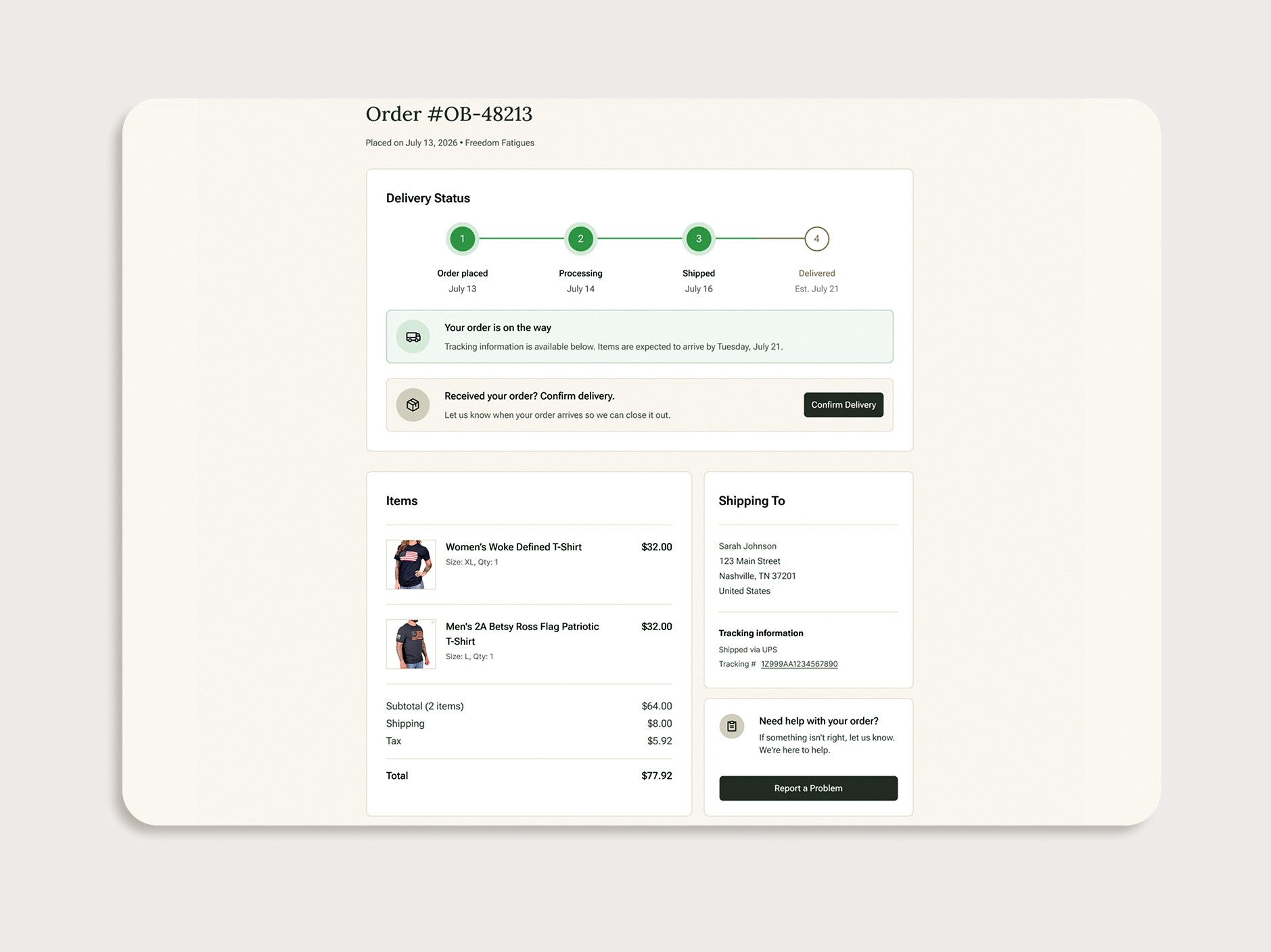
Where is it, and who helps if it's wrong?
Delivery stepper, tracking, confirm-delivery, and an explicit “Report a problem” path — the backbone of buyer protection.
I designed the funnel before I could measure it
No analytics existed on the signup flow when I started. I mapped failures qualitatively with the founder and QA, but I should have pushed for basic event tracking in week one — it would have made every prioritization argument evidence-based instead of persuasive.
I under-designed the multi-seller cart
My first checkout assumed one seller per order because that's the common case today. It won't be for long, and retrofitting split shipping, payouts, and order status is harder than designing for it up front. I designed for the present when I should have designed for the model.
I'd talk to sellers earlier
The onboarding flow is grounded in the founder's conversations and competitive patterns, not my own interviews. Five conversations with already-listed businesses would have told me which fields they actually stumble on — and I suspect fulfillment and shipping, the two I spent longest structuring, are where I'd have been wrong.
Next case study