ONE BISON


One Bison — B2B Marketplace
UX Designer
Team:
Product manager
Engineering
QA
Focus:
End-to-end workflows
Responsive UX
Design system
Engineering collaboration
Directory to marketplace
Discover company
→
Company profile
→
External vendor site
Seller onboarding
→
Products
→
Payments
→
Orders
Buyer discovery
→
Products
→
Cart
→
Checkout
→
Delivery
The existing reality — I wasn’t starting with a blank canvas
01
Live production UI
02
Older Figma designs

03
Previous developer-built pages

04
New e-commerce designs

Map buyer and seller workflows
Design new experiences
Handle states and edge cases
Audit existing patterns
Create reusable components
Improve visual and behavioral consistency
Work with Engineering and QA
Clarify requirements
Review implementation
Launch-critical workflows and blockers
Forms, statuses, validation, reusable UI patterns
Lower-impact legacy inconsistencies
Designing forward without waiting for every answer
Vendors were already managing product information elsewhere. Asking them to recreate and maintain the same information again created unnecessary work.
WHAT WE KNEW
Sellers needed multiple ways to add products
Manual entry still mattered
Shopify should remain optional
CSV was useful
Sellers should choose which products to import
Existing product-management patterns should be reused
WHAT WAS STILL UNKNOWN
Some inventory behavior
Variants
Multiple inventory locations
Sync ownership
Some technical integration details
Product-feed feasibility
We separated stable user needs from unresolved implementation decisions.
From ambiguity to prioritized work
NOW / HIGHEST
→
NEXT / HIGH
→
LATER / MEDIUM
→
BLOCKED / FUTURE
Foundation → Building → Mastery
Screen 1 — Add Products
Manual / Shopify / CSV / Future product feed


Screen 2 — Connect Shopify

Screen 3 — Select products


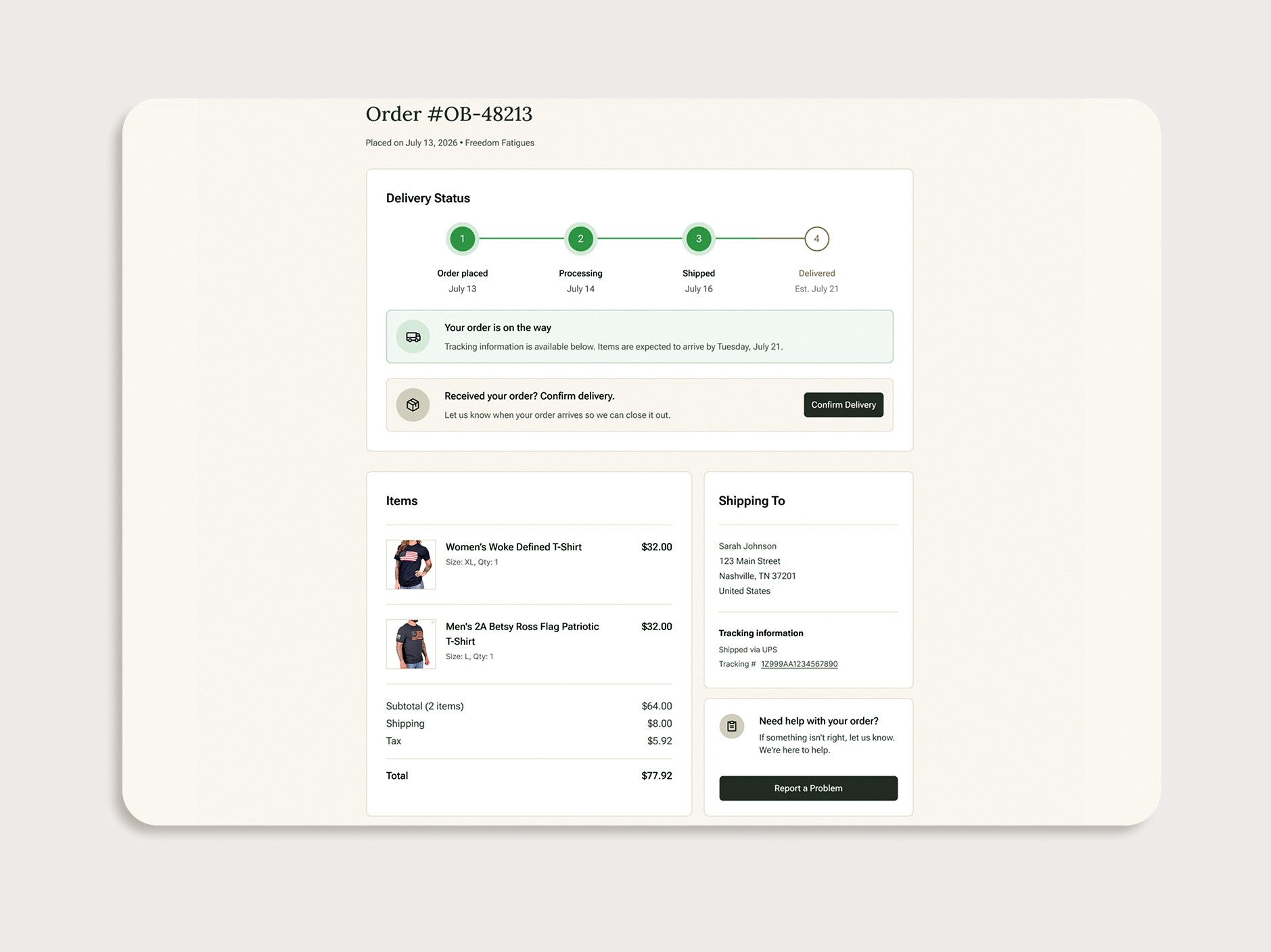
THE TRANSACTION LIFECYCLE
Seller named above the line items, with a plain statement that the order ships directly from them.

Guest checkout with an account-found prompt, itemized costs, Stripe and buyer protection under the button.

Order number, ship-from seller, and a route into order history so the purchase creates an account relationship.

Delivery stepper, tracking, confirm-delivery, and an explicit “Report a problem” path — the backbone of buyer protection.
PRE-LAUNCH MOMENTUM
The commerce experience is currently in development.
The growth above reflects One Bison's existing business and pre-launch marketplace momentum—not post-launch commerce performance. My work focuses on designing the seller, discovery, checkout, payment, and post-purchase experiences that will support this growing ecosystem when transactions go live.
AI-assisted product listing
Intent-aware discovery
Post-purchase assistance
WHAT I'D DO DIFFERENTLY
Instrument before redesigning
I designed the signup funnel before reliable event tracking existed. Next time, I would establish baseline events before making major flow decisions so that prioritization is grounded in behavior rather than persuasion.
Design for the commerce model, not today's edge case
My first checkout assumed one seller per order. Supporting multi-seller transactions later introduces split shipping, payouts, and order-status complexity that would have been easier to model earlier.
Talk to sellers sooner
The onboarding flow relied heavily on existing team knowledge and competitive patterns. Earlier seller interviews would have helped me validate which setup fields actually created the most friction.
Next case study